FastMBO - Internal Goal-Setting and Bonus Calculation System — architecture review
This page assembles sections relevant to architecture review: goals, requirements, and constraints; system model; architecture and integrations; security, quality, and operations; and decisions, trade-offs, and risks.
Contents
- Summary
- Goals, Requirements, and Constraints
- System Model
- Architecture and Integrations
- Security, Quality, and Operations
- Decisions, Trade-offs, and Risks
Summary
Status
historical internal project / reconstructed case study
Role
initiator, systems analyst, concept author, prototype developer
Stack
Type: Internal automation / MBO system / lightweight internal ERP; Scale: internal use in an organization of up to 350 employees; Period: early transition stage from IT administration to systems analysis and internal systems development
Project value
FastMBO is an internal system for automating goal-setting, evaluation sheet collection, achievement approval, and bonus calculation based on the MBO model.
What this demonstrates
FastMBO demonstrates an early stage of my professional evolution: from an infrastructure-focused role to systems analysis, internal automation, and architectural thinking.
The project demonstrates:
- ability to identify an operational problem and propose automation;
- transition from a manual process to a digital workflow;
- work with roles, statuses, periods, calculations, and approvals;
- understanding of the economic effect of automation;
- early experience designing an internal ERP-like system;
- transition from “writing a utility” to “designing a system”.
Goals, Requirements, and Constraints
Goals and Non-Goals
Create an internal system that moves the MBO process from manual document flow to a controlled digital workflow.
Requirements
The system was intended to support:
- creation and configuration of evaluation periods;
- management of metrics and achievement templates;
- generation of evaluation sheets for employees;
- online data entry;
- approval of achievements and metrics;
- automatic calculation of total scores, point value, and bonus amount;
- manual corrections where required;
- publication of results in a personal account;
- export of final results for further processing.
Constraints
System Model
Domain Model
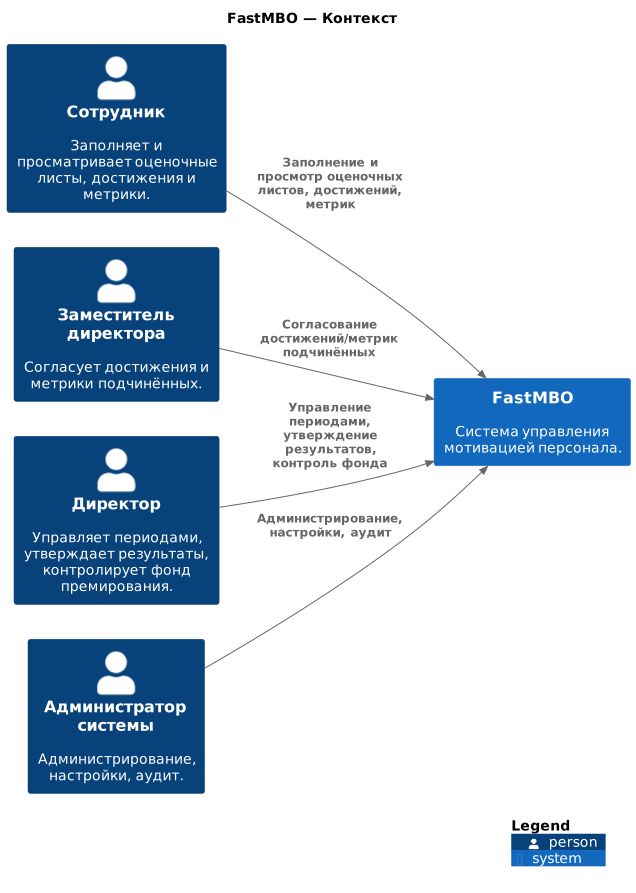
User Roles (Actors)
- Employee - fills in the evaluation sheet, adds achievements, views results.
- Manager - approves achievements and metrics of direct reports.
- Responsible user - controls the period and checks data completeness and correctness.
- Director - approves final results and controls the bonus fund.
- System administrator - manages settings, users, periods, and audit.
Data Model
ERD

API Contracts
Architecture and Integrations
Architecture
Architectural Approach
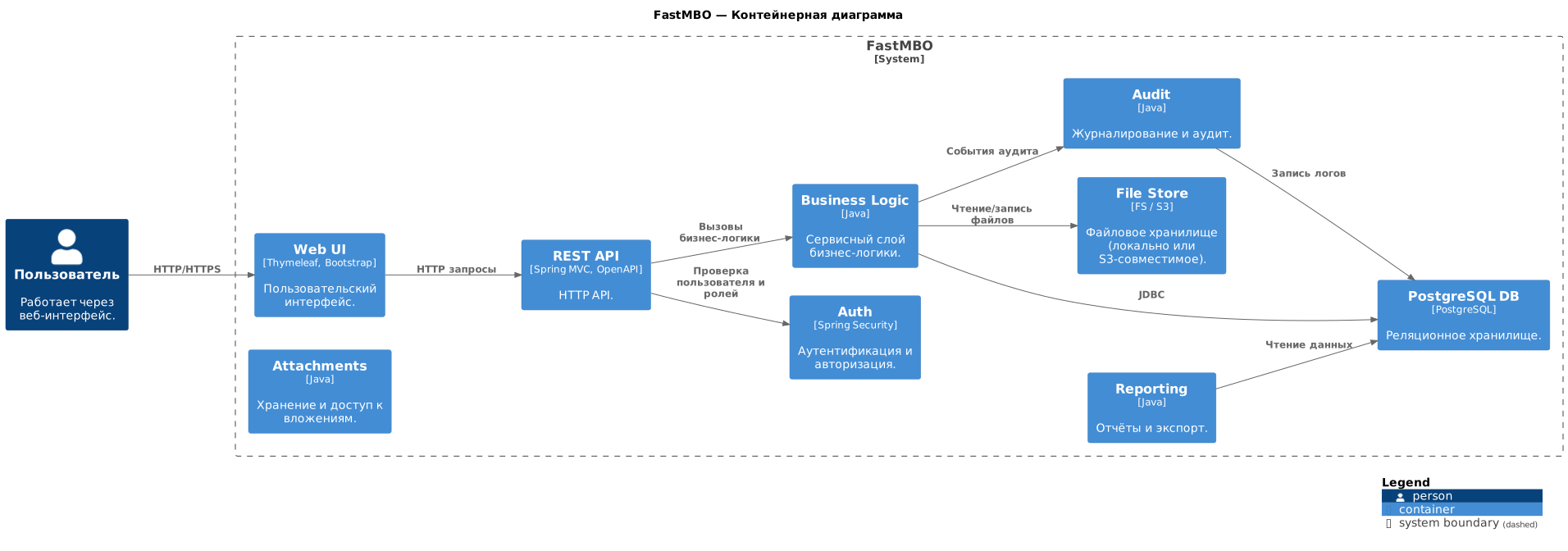
The system was designed as a monolithic web application for internal use.
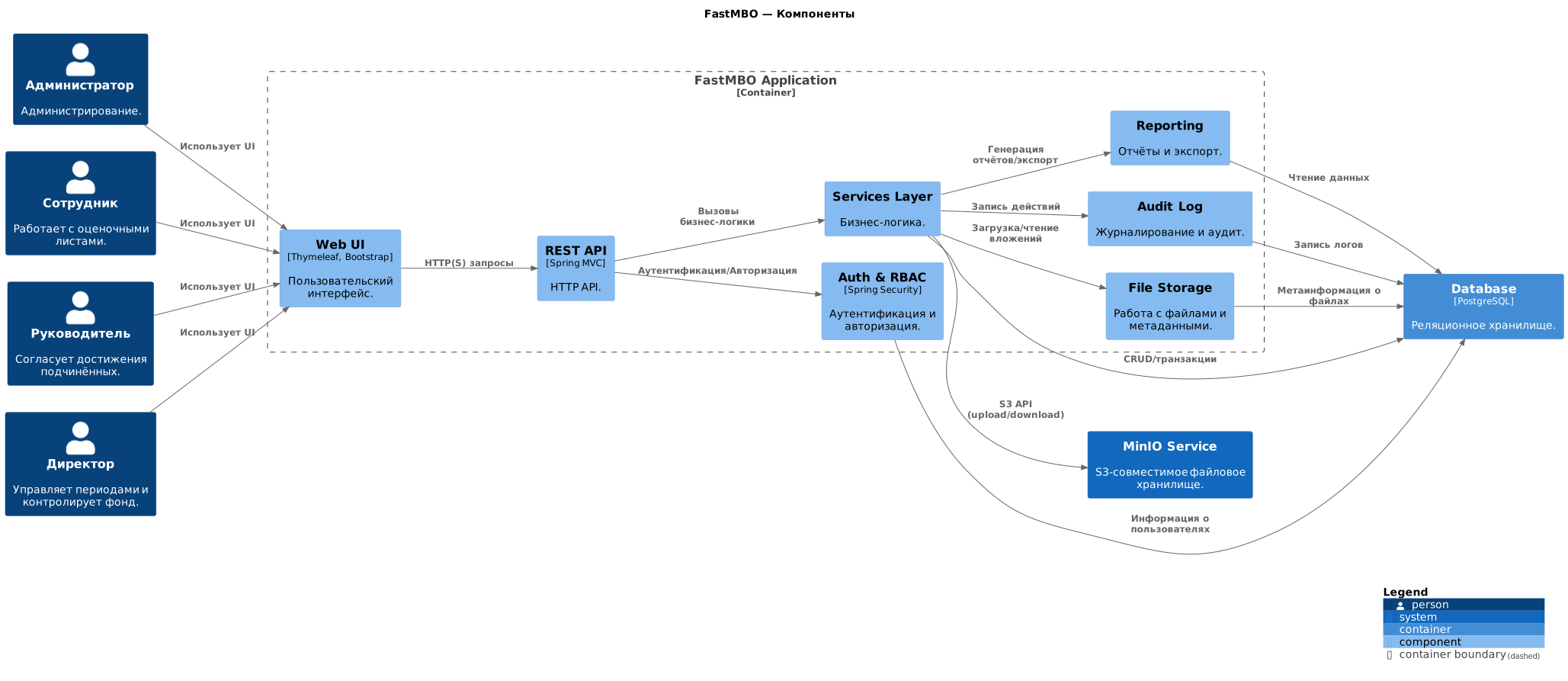
The target architecture included:
- web interface for employees and managers;
- authentication and authorization;
- service layer for business logic;
- relational storage;
- reporting and export module;
- action logging;
- file storage for attachments.
Architecture Artifacts
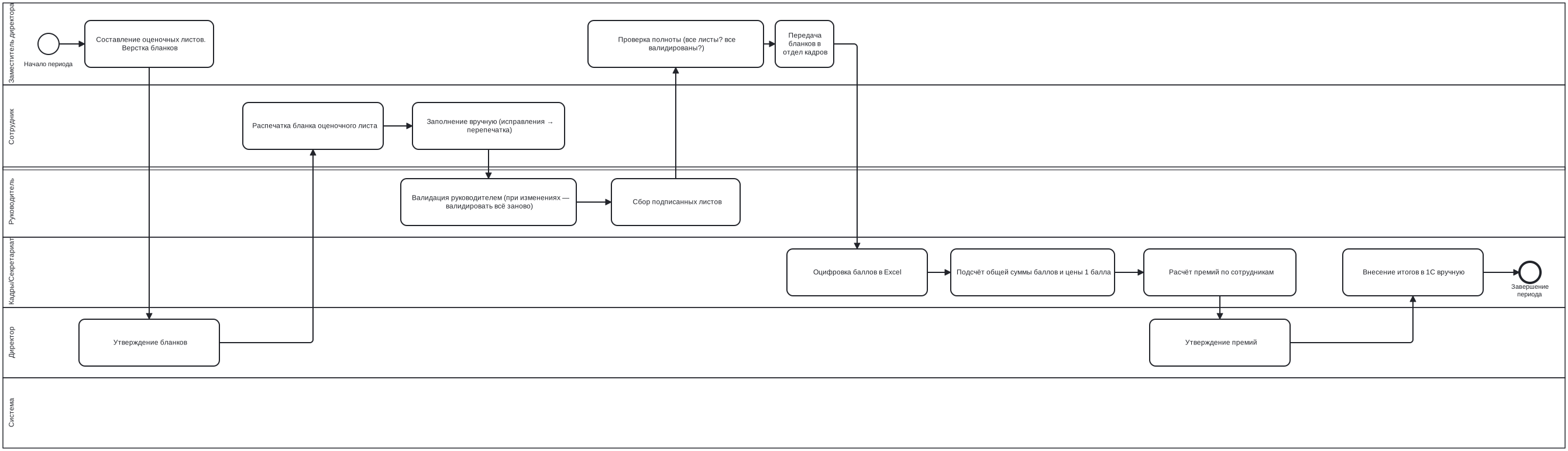
BPMN Business Processes
AS-IS
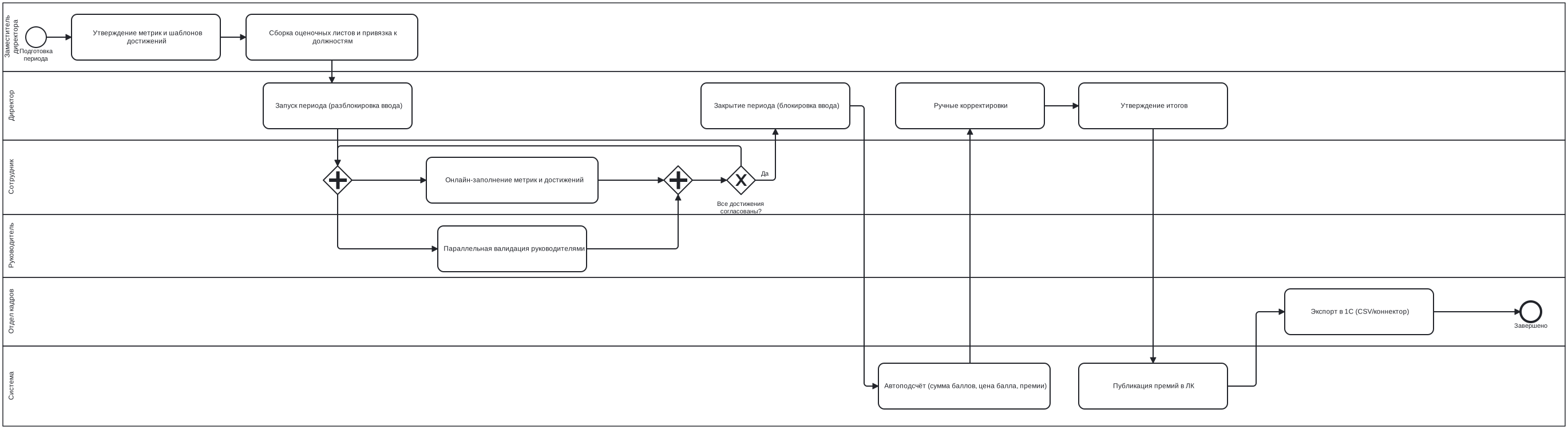
TO-BE
C4 Context
C4 Container
C4 Component
Integration Flows
Target TO-BE Process
The target process assumed a transition to a controlled digital cycle:
- Preparation of the evaluation period.
- Approval of metrics and achievement templates.
- Generation of evaluation sheets and assignment to job positions.
- Period launch and input unlocking.
- Online entry of metrics and achievements by employees.
- Parallel validation by managers.
- Period closure and input locking.
- Automatic calculation of scores, point value, and bonuses.
- Manual corrections where required.
- Final approval.
- Publication of bonuses in the personal account.
- Export of final results to 1C via CSV or connector.
Security, Quality, and Operations
Security and Access Model
User Roles
- Employee - fills in the evaluation sheet, adds achievements, views results.
- Manager - approves achievements and metrics of direct reports.
- Responsible user - controls the period and checks data completeness and correctness.
- Director - approves final results and controls the bonus fund.
- System administrator - manages settings, users, periods, and audit.
Non-Functional Requirements
Failure Modes
Sizing and Cost Notes
Economic Effect
The project was justified through the reduction of manual work during preparation, checking, recalculation, and data transfer.
The estimate showed time savings of more than 300,000 RUB per year for an annual evaluation cycle. With a monthly or more frequent cycle, the effect scaled significantly due to process repetition.
Additional effect:
- less manual data transfer;
- fewer repeated approvals caused by corrections;
- higher status transparency;
- faster preparation of final results;
- easier audit of the evaluation period.
Decisions, Trade-offs, and Risks
Key Decisions
Trade-offs
Monolith vs distributed architecture
A monolith was justified by the context:
- limited user base;
- internal deployment;
- one main business process;
- no need for distributed architecture;
- limited maintenance resources.
Project Limitations
The project was not brought to the maturity level of a production system with a full delivery lifecycle, testing process, release process, and ongoing support.
The original documentation was incomplete and insufficiently formalized. Part of the current architecture materials was reconstructed later as a portfolio case study.
See also Architecture Decision Records.