FastMBO - Internal Goal-Setting and Bonus Calculation System — demo pack
This page assembles sections relevant to demos and stakeholder presentations: overview, role, architecture, decisions, roadmap, and demonstration.
Contents
- Summary
- Overview
- Role and Responsibilities
- Architecture and Integrations
- Decisions, Trade-offs, and Risks
- Roadmap and Demonstration
Summary
Status
historical internal project / reconstructed case study
Role
initiator, systems analyst, concept author, prototype developer
Stack
Type: Internal automation / MBO system / lightweight internal ERP; Scale: internal use in an organization of up to 350 employees; Period: early transition stage from IT administration to systems analysis and internal systems development
Project value
FastMBO is an internal system for automating goal-setting, evaluation sheet collection, achievement approval, and bonus calculation based on the MBO model.
What this demonstrates
FastMBO demonstrates an early stage of my professional evolution: from an infrastructure-focused role to systems analysis, internal automation, and architectural thinking.
The project demonstrates:
- ability to identify an operational problem and propose automation;
- transition from a manual process to a digital workflow;
- work with roles, statuses, periods, calculations, and approvals;
- understanding of the economic effect of automation;
- early experience designing an internal ERP-like system;
- transition from “writing a utility” to “designing a system”.
Overview
FastMBO is an internal system for automating goal-setting, evaluation sheet collection, achievement approval, and bonus calculation based on the MBO model.
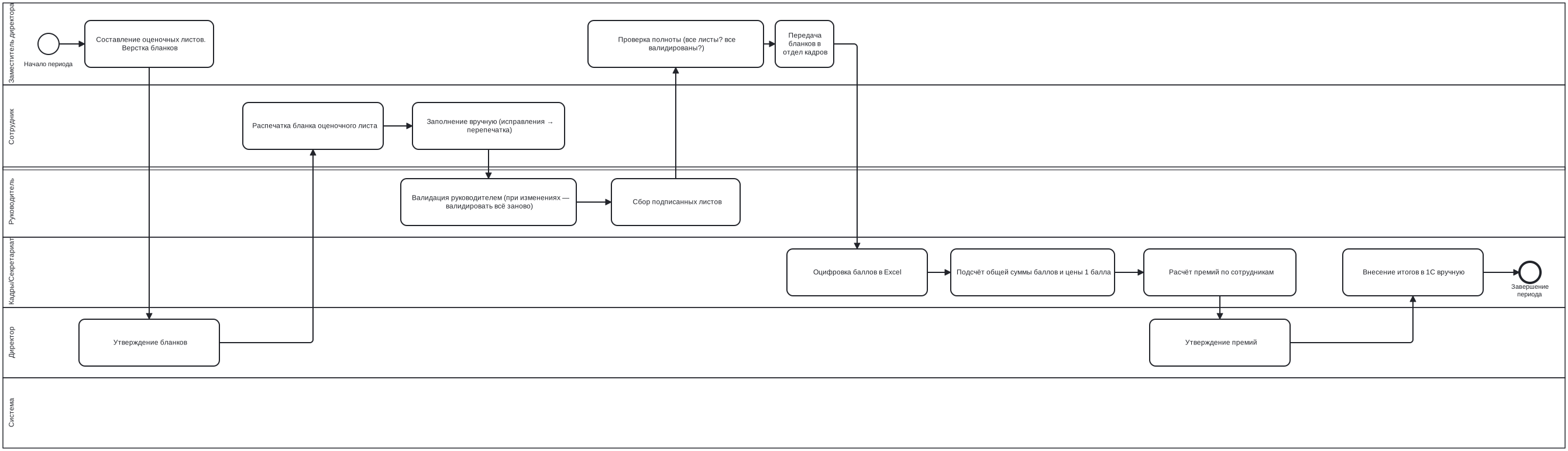
The project emerged from a real operational pain point: employee evaluation was handled manually through paper forms, Excel files, repeated checks, manual digitization, and transfer of final results into accounting systems.
The idea was to replace a fragile manual process with a small internal ERP-like system: employees fill in evaluation sheets online, managers approve achievements, responsible users manage evaluation periods, and the system calculates scores, point value, and final bonuses.
Role and Responsibilities
In this project, I acted as a proactive systems analyst and internal developer.
My contribution:
- identified a recurring operational problem and proposed automation;
- formulated the concept of an internal MBO system;
- analyzed the AS-IS process and proposed a TO-BE process;
- collected and clarified requirements from future users;
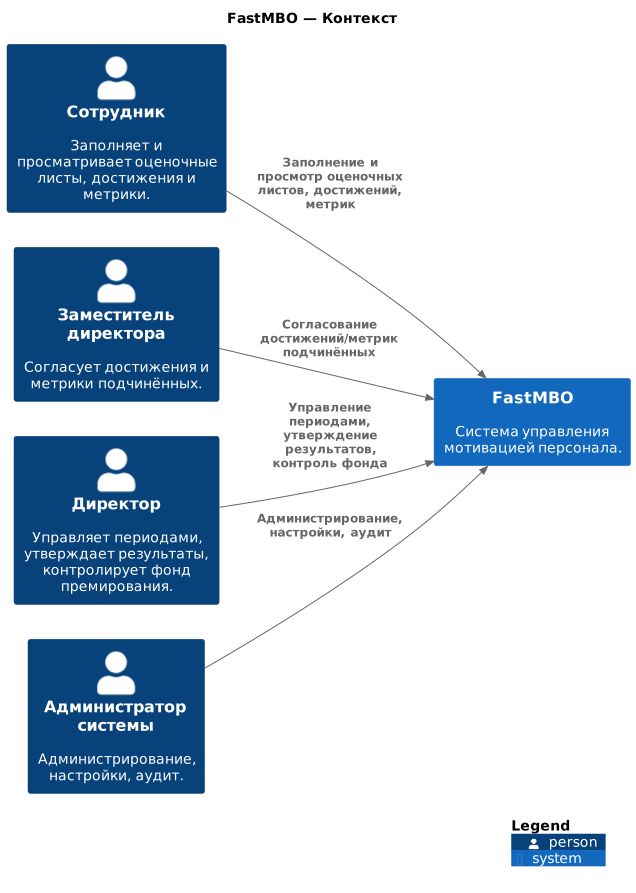
- identified key roles, entities, statuses, and process stages;
- designed the domain model and high-level architecture;
- started independent implementation as a Java/Spring application;
- later reconstructed BPMN, C4, ERD, ADR, and economic justification materials for the portfolio.
Architecture and Integrations
Architecture
Architectural Approach
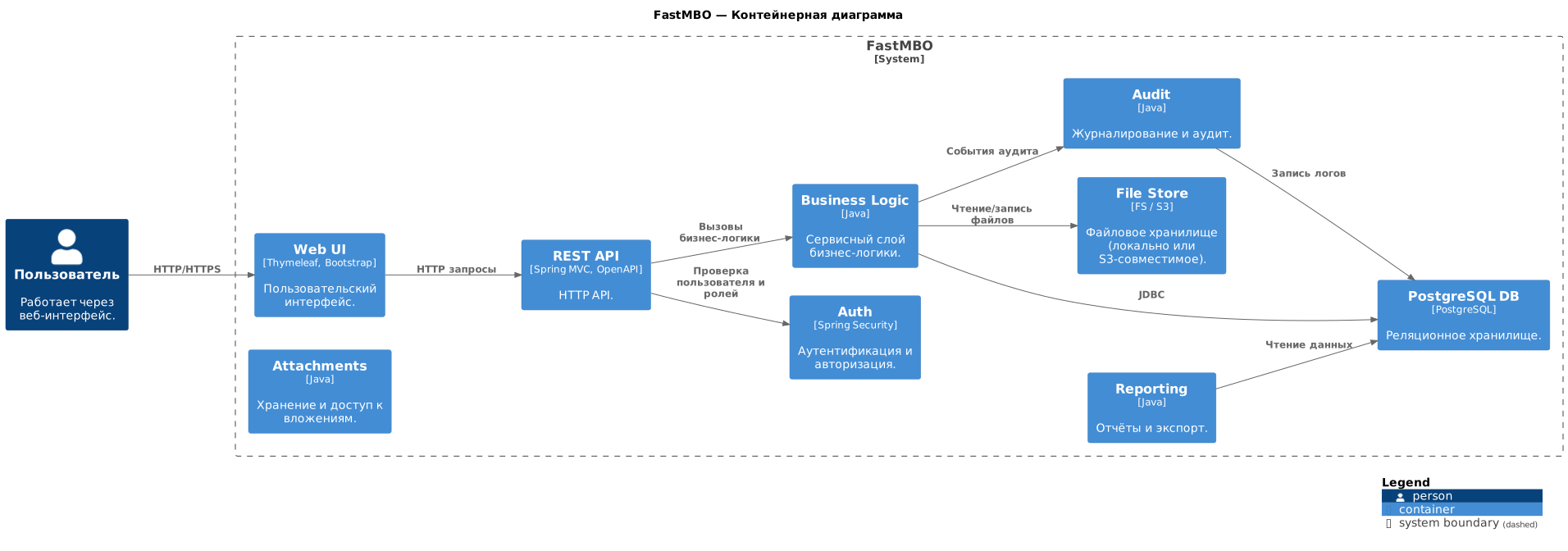
The system was designed as a monolithic web application for internal use.
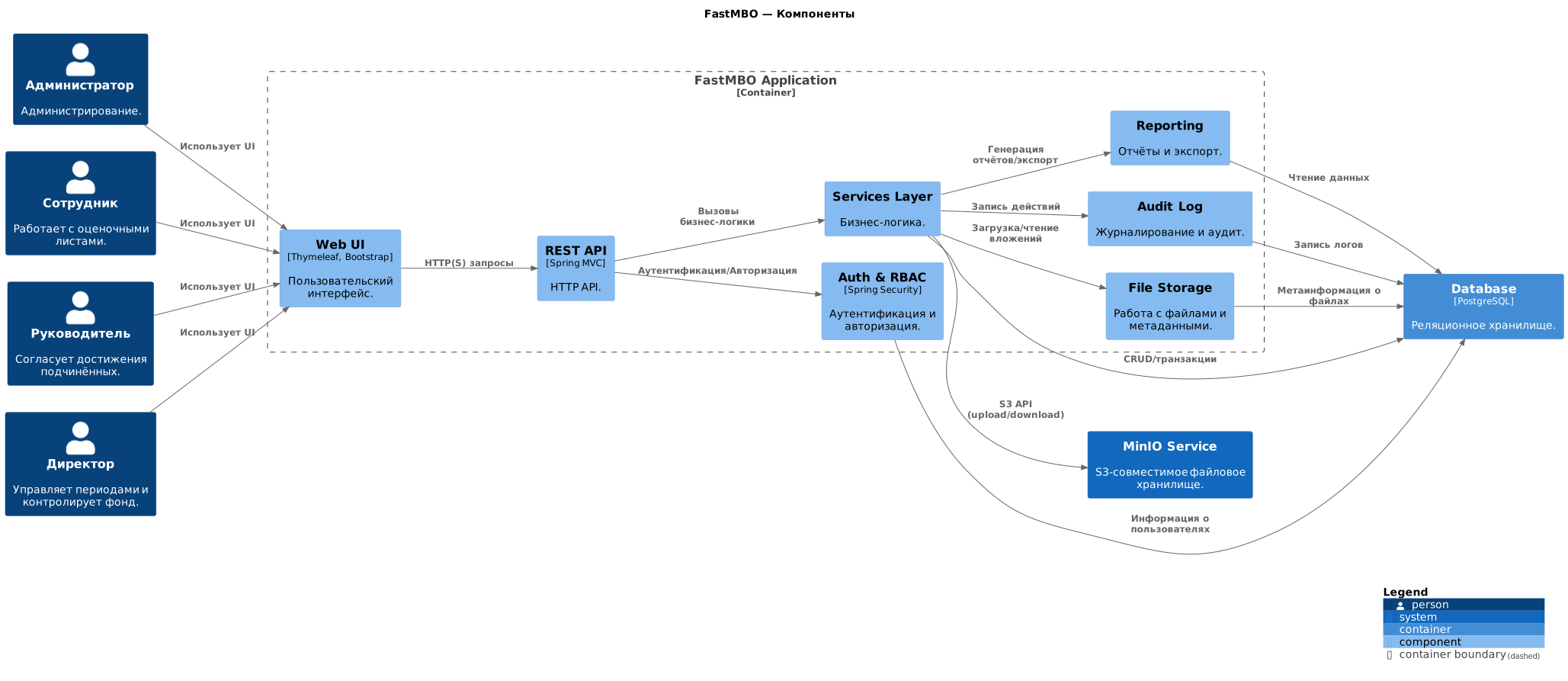
The target architecture included:
- web interface for employees and managers;
- authentication and authorization;
- service layer for business logic;
- relational storage;
- reporting and export module;
- action logging;
- file storage for attachments.
Architecture Artifacts
BPMN Business Processes
AS-IS
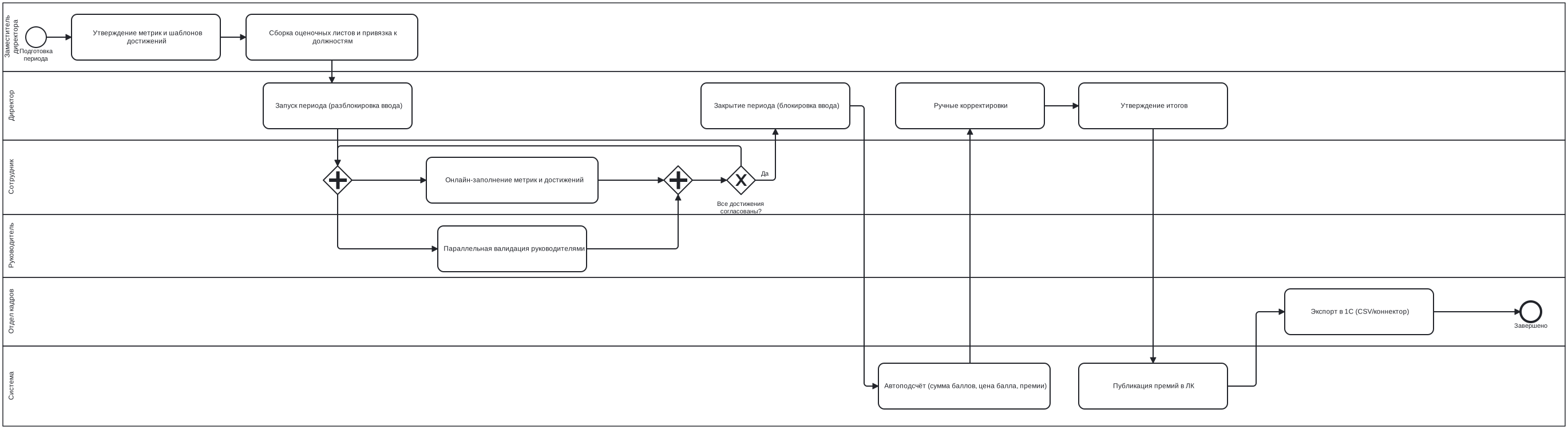
TO-BE
C4 Context
C4 Container
C4 Component
Integration Flows
Target TO-BE Process
The target process assumed a transition to a controlled digital cycle:
- Preparation of the evaluation period.
- Approval of metrics and achievement templates.
- Generation of evaluation sheets and assignment to job positions.
- Period launch and input unlocking.
- Online entry of metrics and achievements by employees.
- Parallel validation by managers.
- Period closure and input locking.
- Automatic calculation of scores, point value, and bonuses.
- Manual corrections where required.
- Final approval.
- Publication of bonuses in the personal account.
- Export of final results to 1C via CSV or connector.
Decisions, Trade-offs, and Risks
Key Decisions
Trade-offs
Monolith vs distributed architecture
A monolith was justified by the context:
- limited user base;
- internal deployment;
- one main business process;
- no need for distributed architecture;
- limited maintenance resources.
Project Limitations
The project was not brought to the maturity level of a production system with a full delivery lifecycle, testing process, release process, and ongoing support.
The original documentation was incomplete and insufficiently formalized. Part of the current architecture materials was reconstructed later as a portfolio case study.
See also Architecture Decision Records.
Roadmap and Demonstration
Roadmap
Screenshots and Demo
What This Demonstrates
FastMBO demonstrates an early stage of my professional evolution: from an infrastructure-focused role to systems analysis, internal automation, and architectural thinking.
The project demonstrates:
- ability to identify an operational problem and propose automation;
- transition from a manual process to a digital workflow;
- work with roles, statuses, periods, calculations, and approvals;
- understanding of the economic effect of automation;
- early experience designing an internal ERP-like system;
- transition from “writing a utility” to “designing a system”.